


Cocoa Cultivation Reimagined
Explanation
What is Dynamic Agroforestry (DAF)?
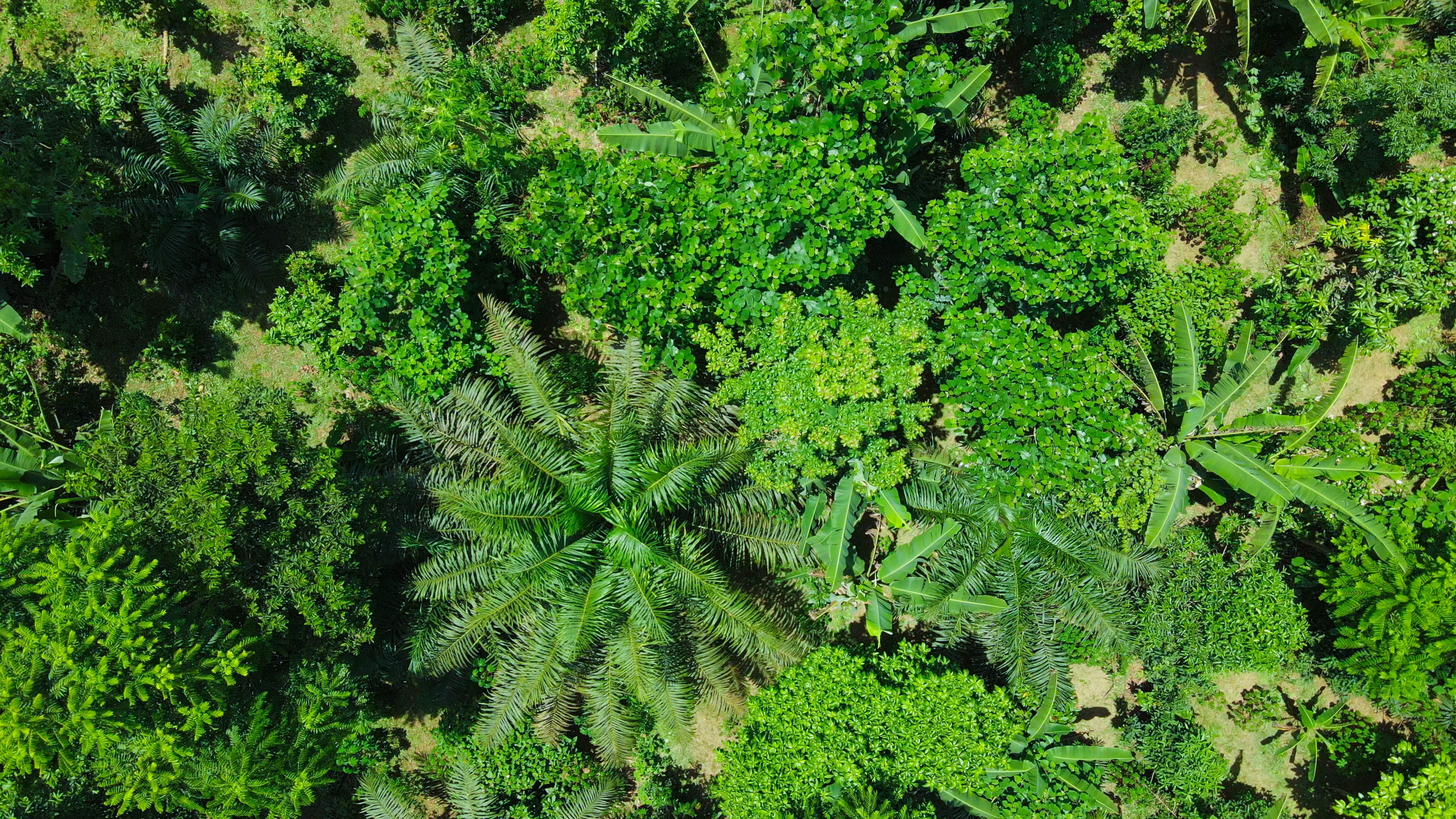
Cacao does not originally grow in bare fields, but under the protection of diverse forest systems. Dynamic Agroforestry (DAF) is based precisely on this principle: Instead of cultivating only cacao on a plot of land, vibrant, multi-layered cultivation systems are created from cacao trees, shade trees, useful plants, and companion vegetation. The goal is not merely to grow cacao. The goal is to build a healthy, productive, and resilient ecosystem that strengthens soil, plants, climate, and people in the long term. For fairafric, DAF is therefore more than a cultivation method. It is a central part of our vision for the future of chocolate.
Conventional cocoa cultivation
A Look at Conventional Cocoa Farming
For many decades, cocoa cultivation was optimized primarily for efficiency, simplification, and short-term yields. The result in many regions is monoculture systems, where almost exclusively cocoa grows. While this may seem economically sensible in the short term, it makes the system vulnerable in the long run. Because where diversity is lacking, precisely those factors that make cultivation sustainably stable disappear: biodiversity, healthy soils, natural cycles, and resilience. Nature and people alike bear the consequences.
Consequences for People and Nature:
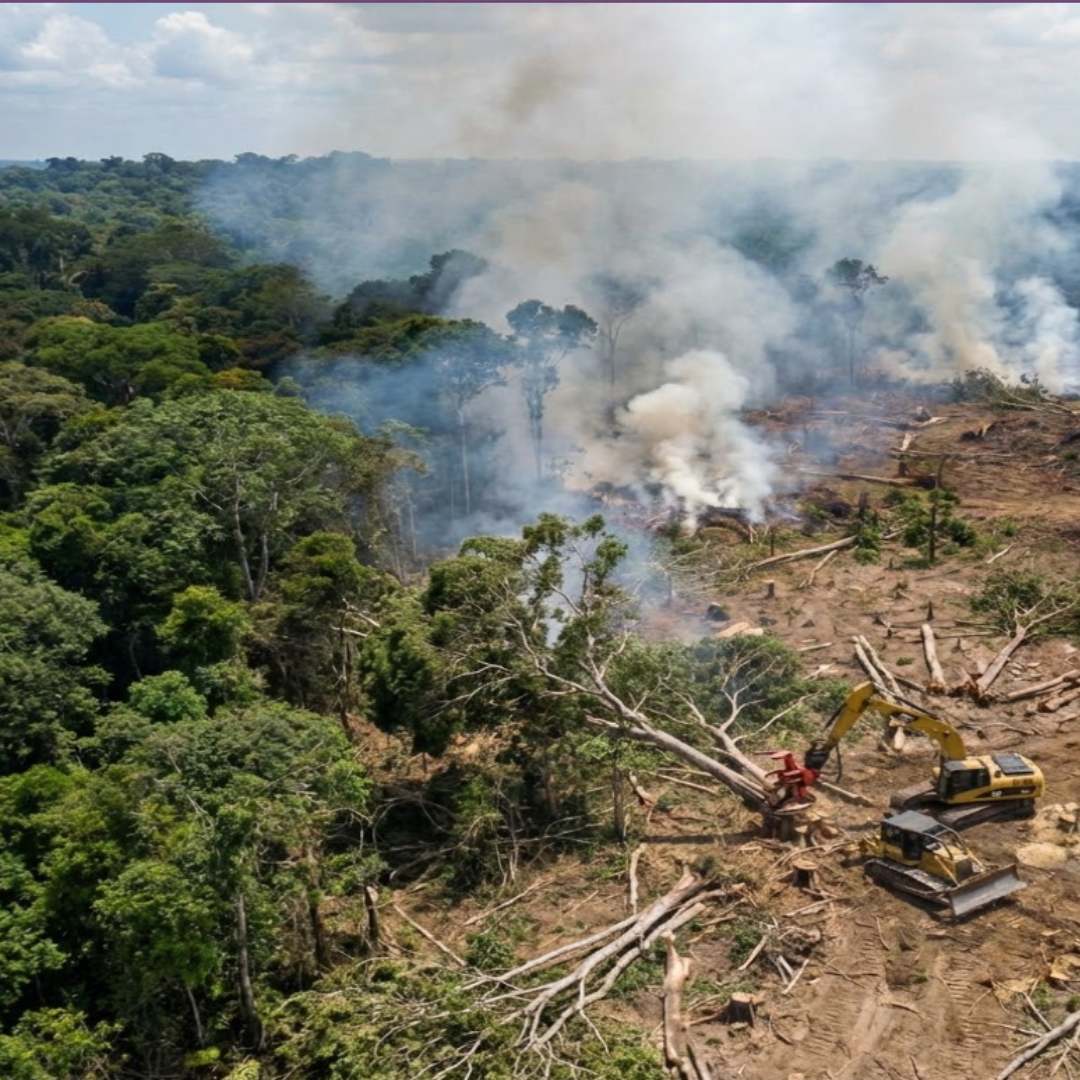
Rainforest deforestation
In West Africa, over 80% of the original forests have already been cleared for cocoa cultivation. Along with the forests, biodiversity, natural habitats, and ecological stability are disappearing. Where diversity vanishes, nature loses its resilience. (cf. World Cocoa Foundation, 2023; International Cocoa Organization, 2022)
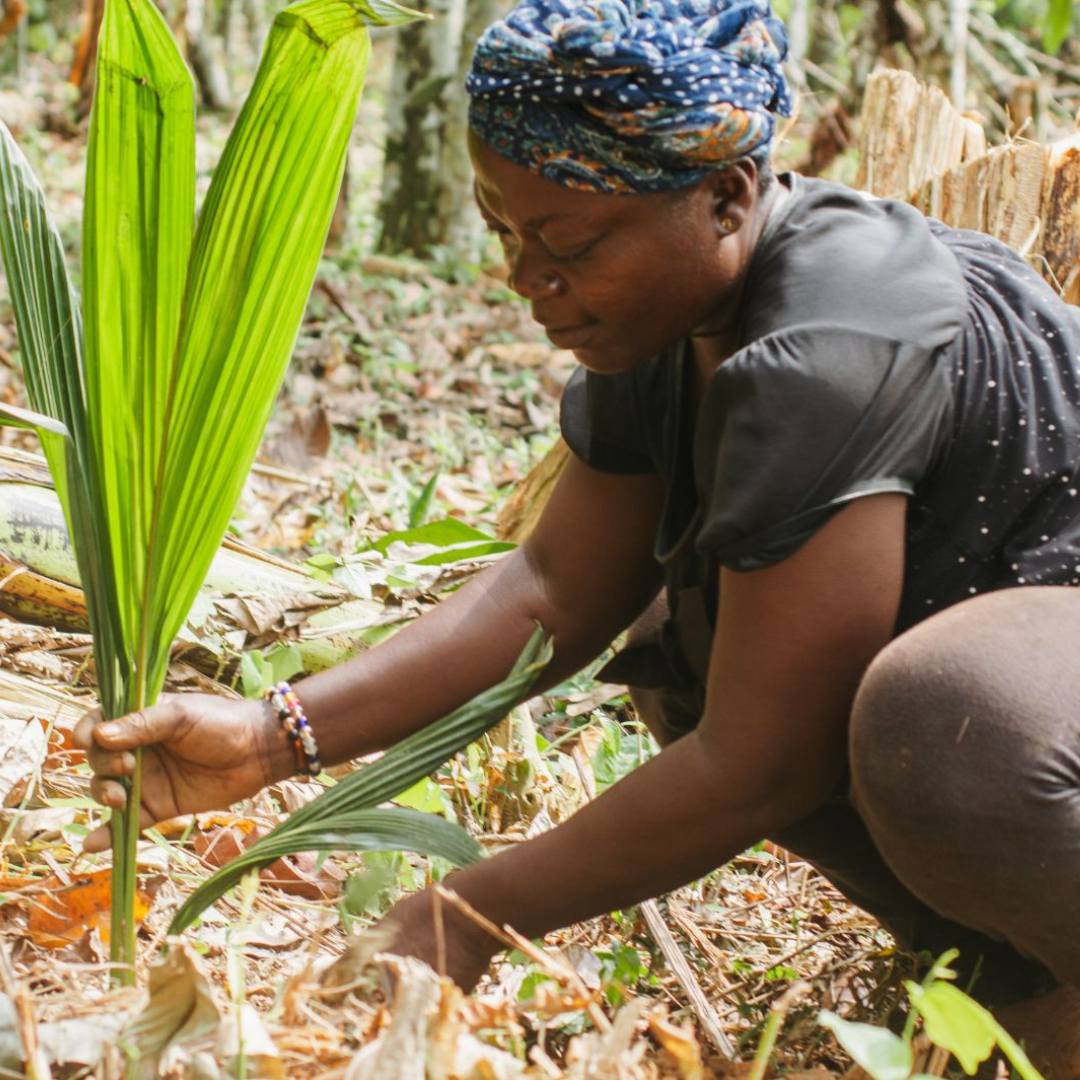
Soils lose their natural fertility
Monocultures deplete the soil unevenly over many years. Humus is degraded, natural cycles are weakened, and the soil's ability to store nutrients and regenerate itself diminishes. In this way, the soil gradually loses its natural fertility.
(cf. International Cocoa Organization, 2022)
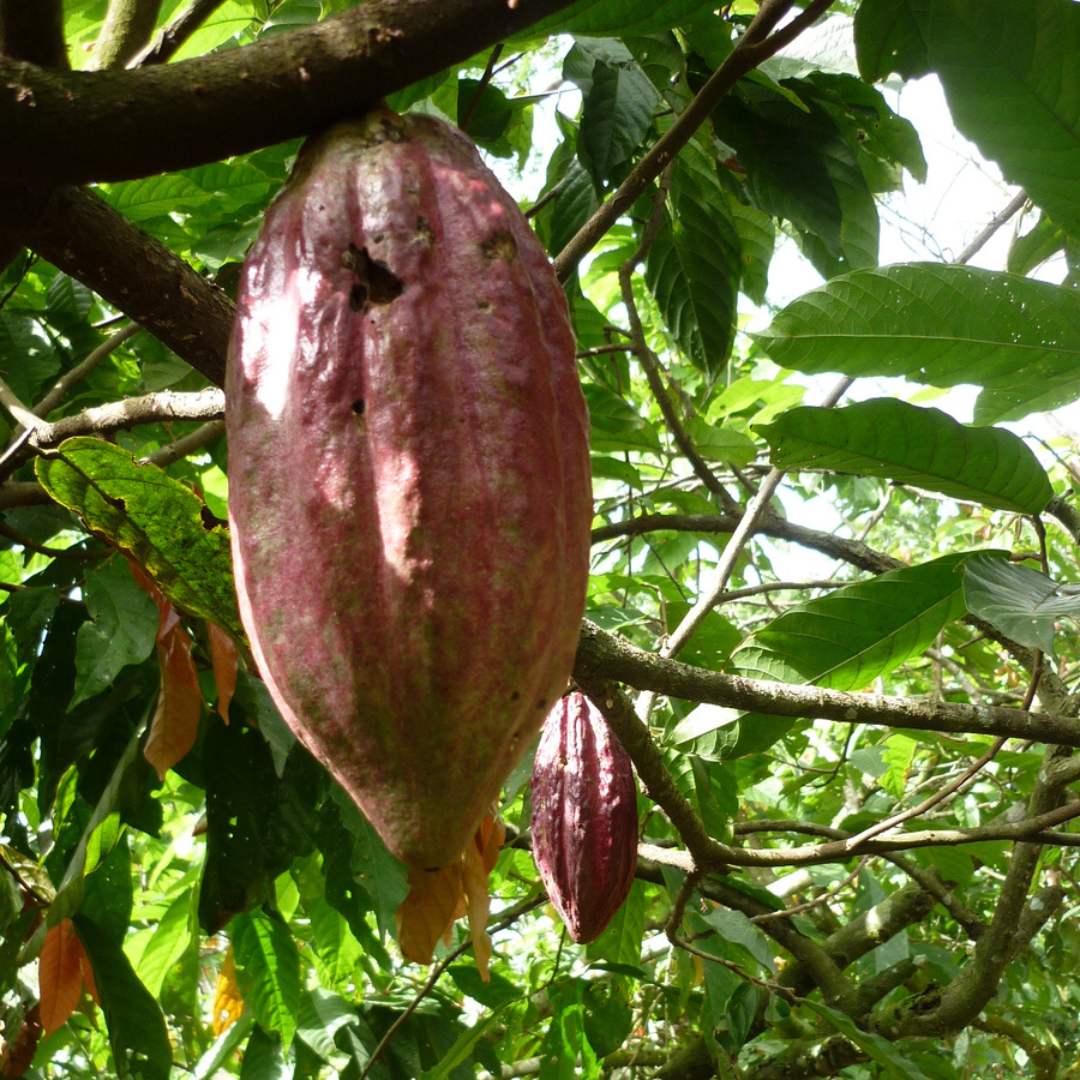
Plants become more vulnerable
Lack of plant diversity promotes the spread of pests and diseases, while heat, heavy rainfall, or periods of drought affect plants more severely because natural protective mechanisms are absent. This makes cocoa cultivation more vulnerable and less resilient.
(cf. International Cocoa Organization, 2022)
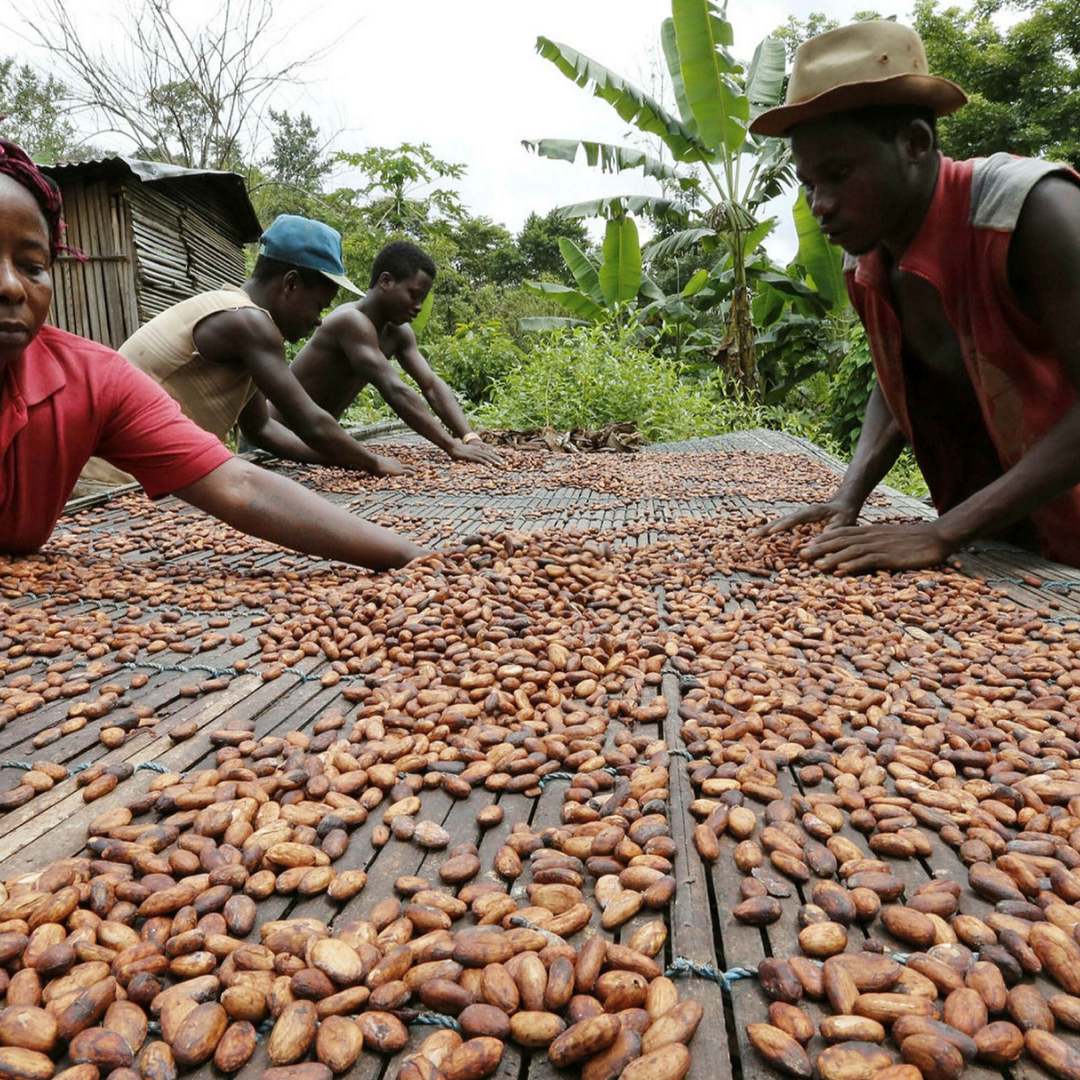
Cocoa families live at subsistence level
Cocoa farmers in West Africa earn on average only about 0.78 US dollars per day – an income that is often not enough to cover basic living needs. Many families have little room for education, investments, or old-age provision (cf. NORC, 2020).
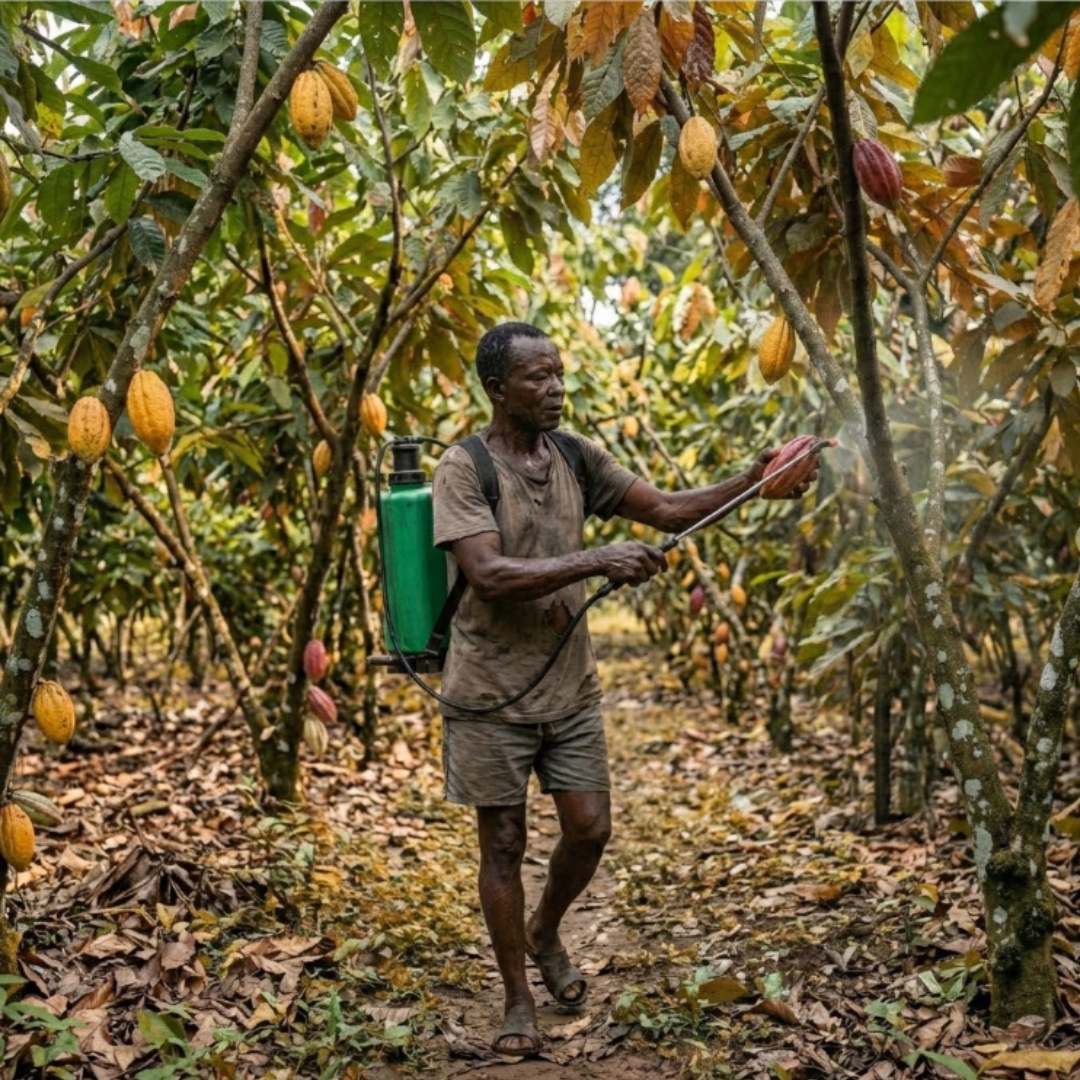
Use of hazardous pesticides
In many cocoa-growing regions, pesticides are part of everyday life: In a study from Ghana, around 81% of the interviewed cocoa farmers stated that they use pesticides. At the same time, studies show residues in soils and drinking water sources from cocoa-growing regions. Many farmers are insufficiently protected and directly exposed to the chemicals (cf. Satoyama Initiative, 2023).
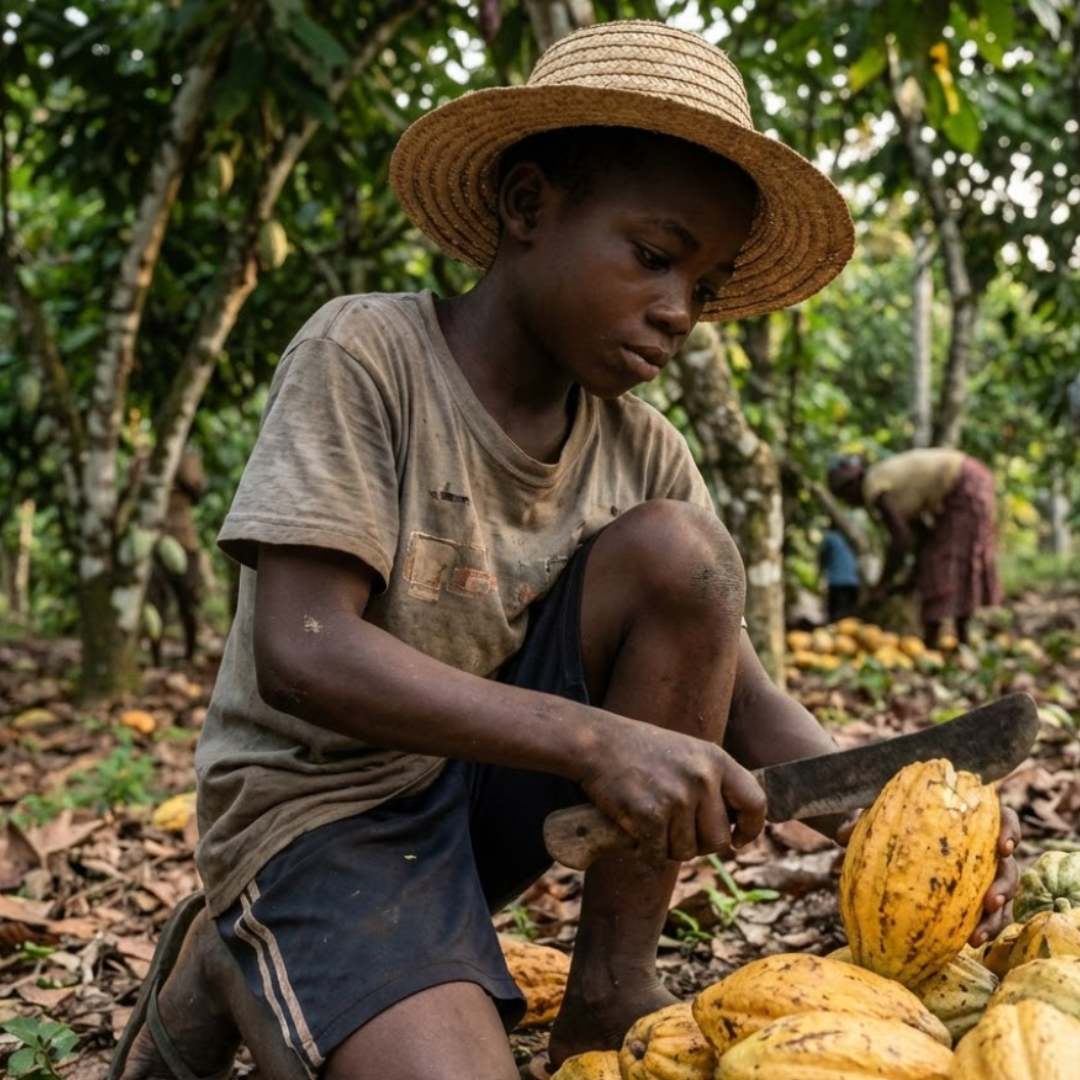
Child labor remains part of the system
Child labor is not a marginal problem, but part of a structural grievance. Insufficient incomes and precarious living conditions mean that children often have to work. Approximately 1.5 million children still work on cocoa farms in West Africa (cf. OICE Network, 2023).
Explained
How Dynamic Agroforestry (DAF) Works
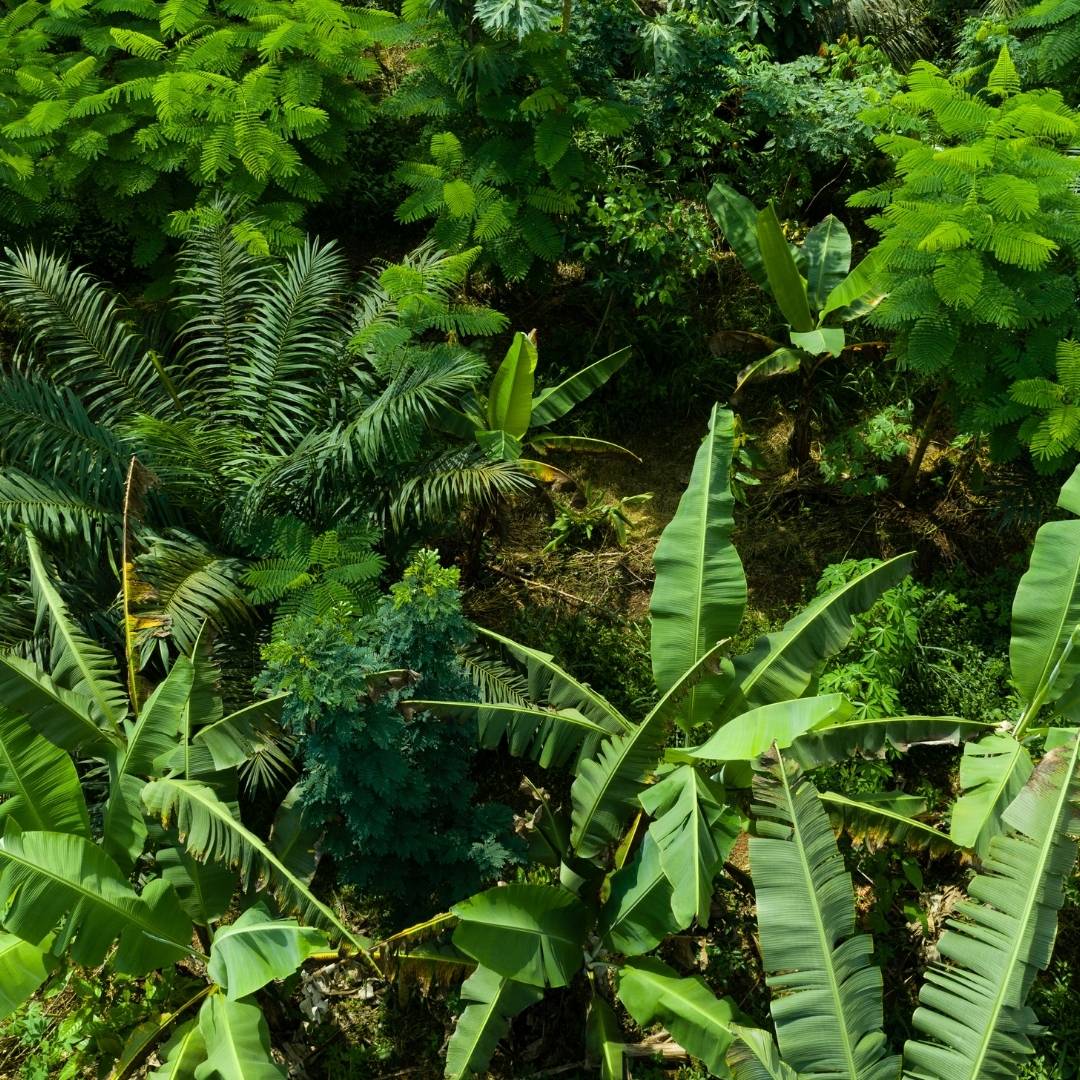
In DAF, cocoa does not grow alone.
It is embedded in a diverse system of shade trees, cash crops, ground cover, and companion vegetation.
This creates:
- more ecological stability
- more habitat for beneficial organisms
- and better conditions for healthy plants
Diversity is not a side effect here – it is the principle.
DAF is typically characterized by high plant density, strong diversity, and systematic layering.
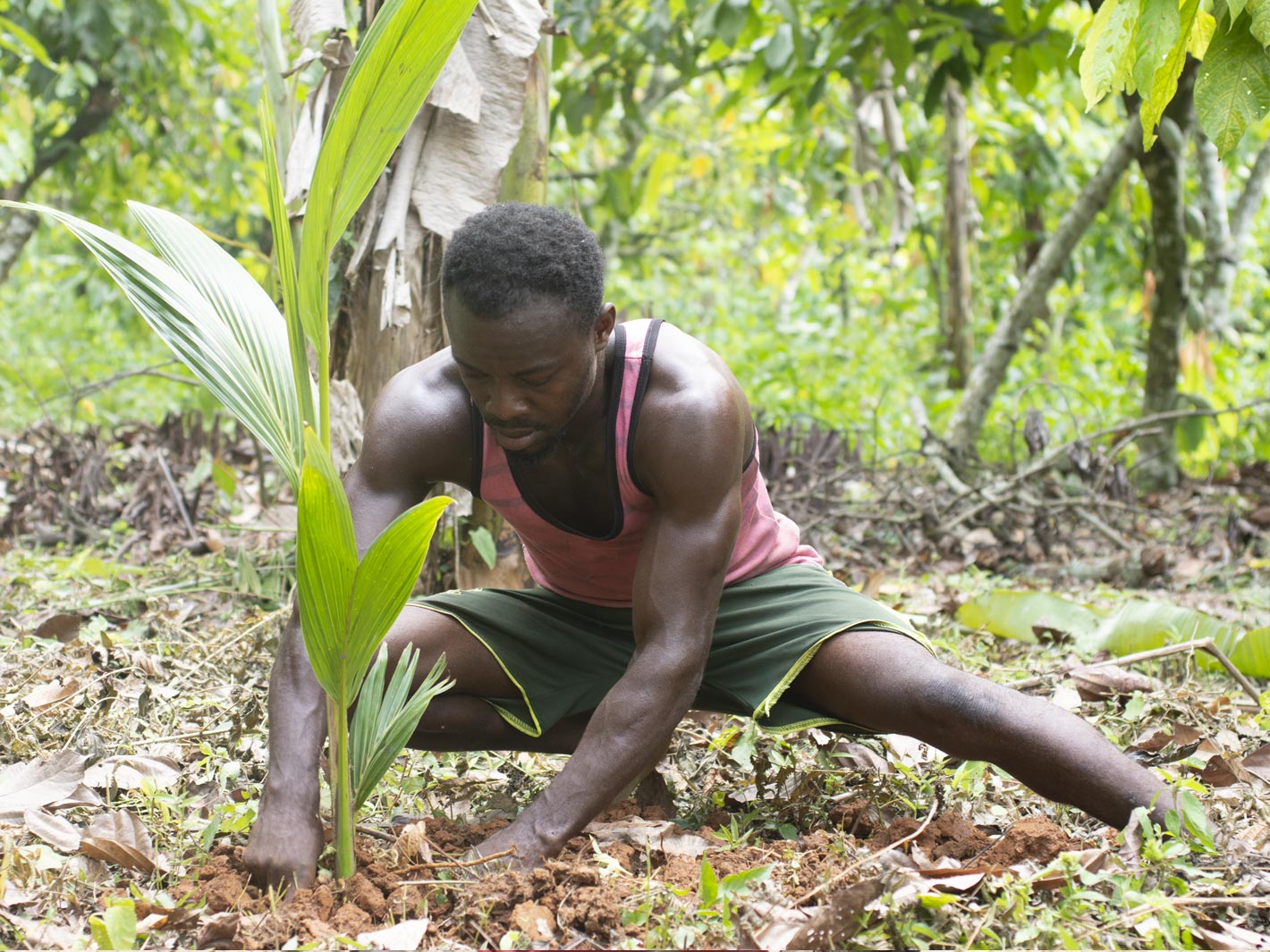
A key lever in Dynamic Agroforestry is the targeted buildup of biomass.
Through pruning, mulching, and natural ground cover, organic material remains in the system and can be transformed back into humus.
This helps the soil to:
- store water better
- retain nutrients better
- regenerate itself in the long term
Studies and practical reports on DAF show that humus accumulation, ground cover, and water storage can be significantly improved.
Healthy soil is the foundation for healthy cocoa.
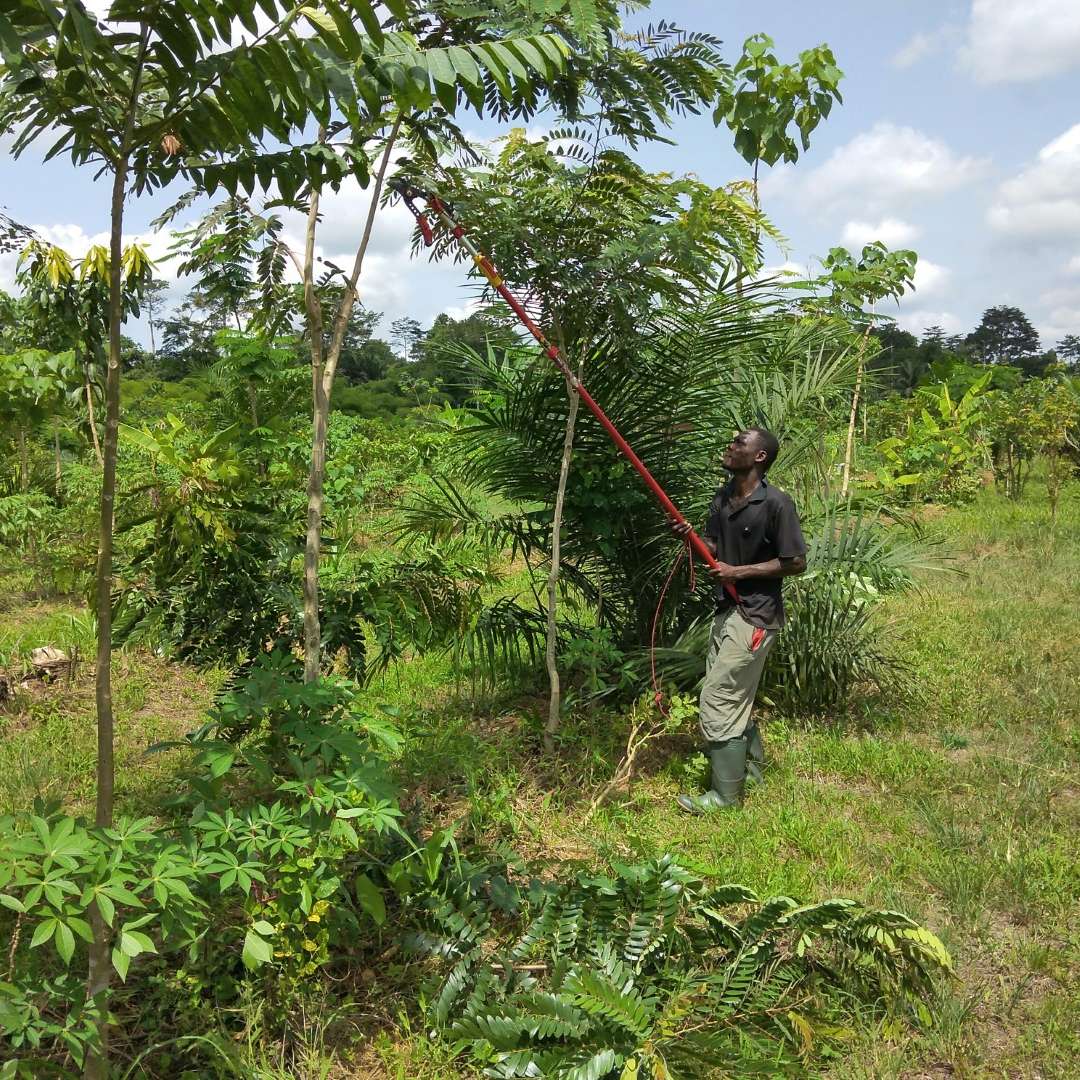
In more stable, diverse systems, pests and diseases cannot spread unchecked as easily.
At the same time, shade, ground cover, and deep-rooted plants help protect the system better against heat, drought, and heavy rainfall.
This doesn't make cultivation perfect – but significantly more resilient.
DAF and agroforestry systems are therefore also discussed as an important response to the increasing climate risks in cocoa cultivation.
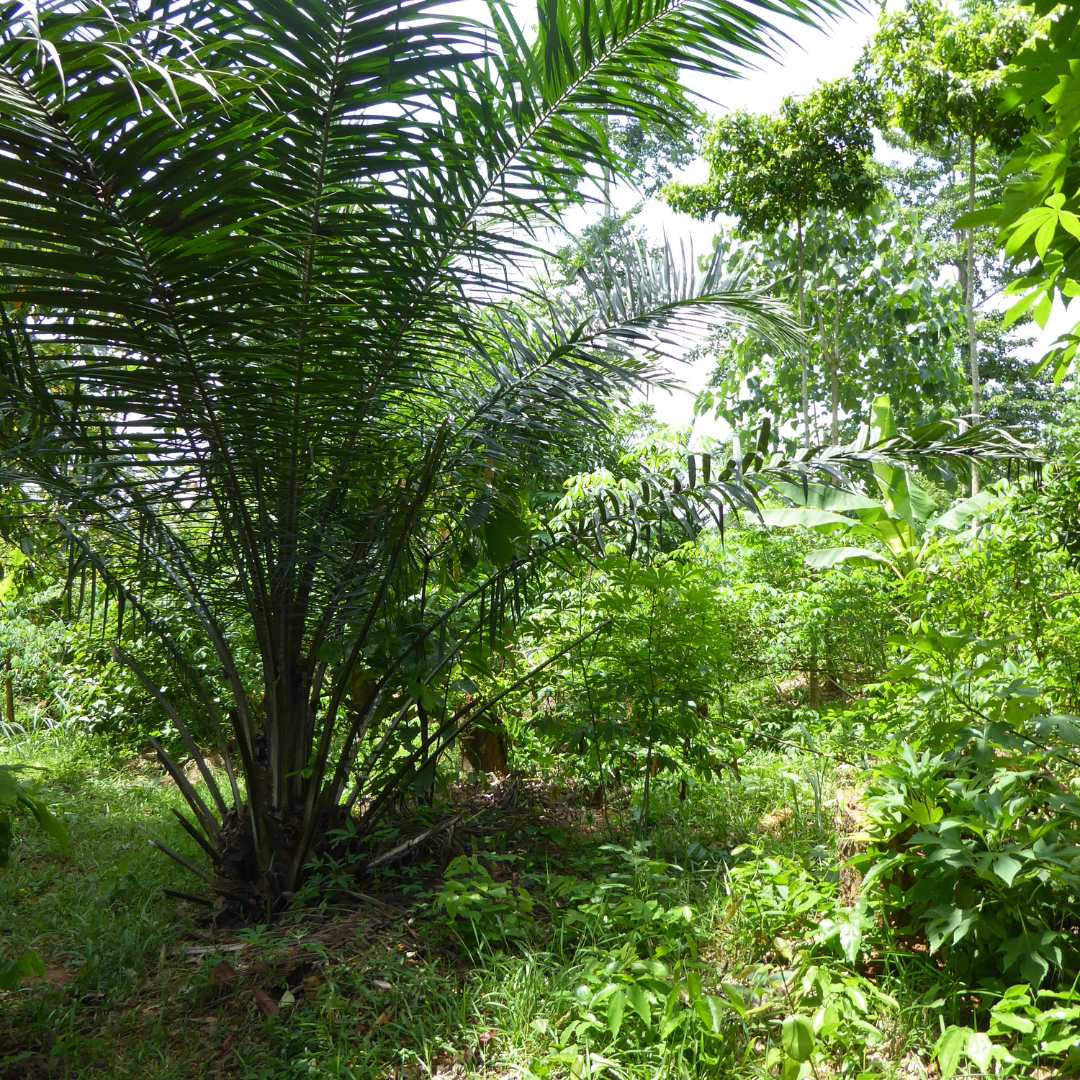
Dynamic agroforestry not only means more biodiversity in the field – but often also more diversity in income and nutrition.
In addition to cocoa, depending on the system, other plants, fruits, or trees can also be part of the cultivation.
This reduces complete dependence on just one crop and just one world market price.
More diversity on the farm can also mean more stability in life.
Practical projects on DAF show that additional products such as bananas, beans, corn, or avocado can be relevant for both self-sufficiency and sale.
In DAF, cocoa does not grow alone.
It is embedded in a diverse system of shade trees, cash crops, ground cover, and companion vegetation.
This creates:
- more ecological stability
- more habitat for beneficial organisms
- and better conditions for healthy plants
Diversity is not a side effect here – it is the principle.
DAF is typically characterized by high plant density, strong diversity, and systematic layering.
A key lever in Dynamic Agroforestry is the targeted buildup of biomass.
Through pruning, mulching, and natural ground cover, organic material remains in the system and can be transformed back into humus.
This helps the soil to:
- store water better
- retain nutrients better
- regenerate itself in the long term
Studies and practical reports on DAF show that humus accumulation, ground cover, and water storage can be significantly improved.
Healthy soil is the foundation for healthy cocoa.
In more stable, diverse systems, pests and diseases cannot spread unchecked as easily.
At the same time, shade, ground cover, and deep-rooted plants help protect the system better against heat, drought, and heavy rainfall.
This doesn't make cultivation perfect – but significantly more resilient.
DAF and agroforestry systems are therefore also discussed as an important response to the increasing climate risks in cocoa cultivation.
Dynamic agroforestry not only means more biodiversity in the field – but often also more diversity in income and nutrition.
In addition to cocoa, depending on the system, other plants, fruits, or trees can also be part of the cultivation.
This reduces complete dependence on just one crop and just one world market price.
More diversity on the farm can also mean more stability in life.
Practical projects on DAF show that additional products such as bananas, beans, corn, or avocado can be relevant for both self-sufficiency and sale.

Cocoa as a Climate Savior?
Comparison of Cultivation Systems
Conventional Cocoa Cultivation vs. Dynamic Agroforestry
Conventional cocoa cultivation (left) focuses on growing a single plant variety, while Dynamic Agroforestry (right) represents a diverse, near-natural cultivation system with multiple plant species. Discover the differences in sustainability, biodiversity, and long-term profitability.
Dynamic Agroforestry (DAF)
Conventional Cultivation
Diverse, multi-layered system with cocoa, shade trees, and companion plants
Simplified or monocultural systems with low plant diversity
Increased CO₂ sequestration by trees, humus accumulation, and more biomass
Low CO₂ sequestration, often associated with deforestation and degraded soils
Increased biodiversity through diverse plant and tree structures
Low biodiversity and loss of natural habitats
Soils can regenerate and remain fertile in the long term
Low, soils are depleted faster and lose humus
No use of pesticides due to more stable ecological cycles
Use of chemical pesticides, risks for environment and farmers
Significantly higher income through additional cocoa premiums and diversified income sources
Low income, high dependence on a single crop and on the world market price
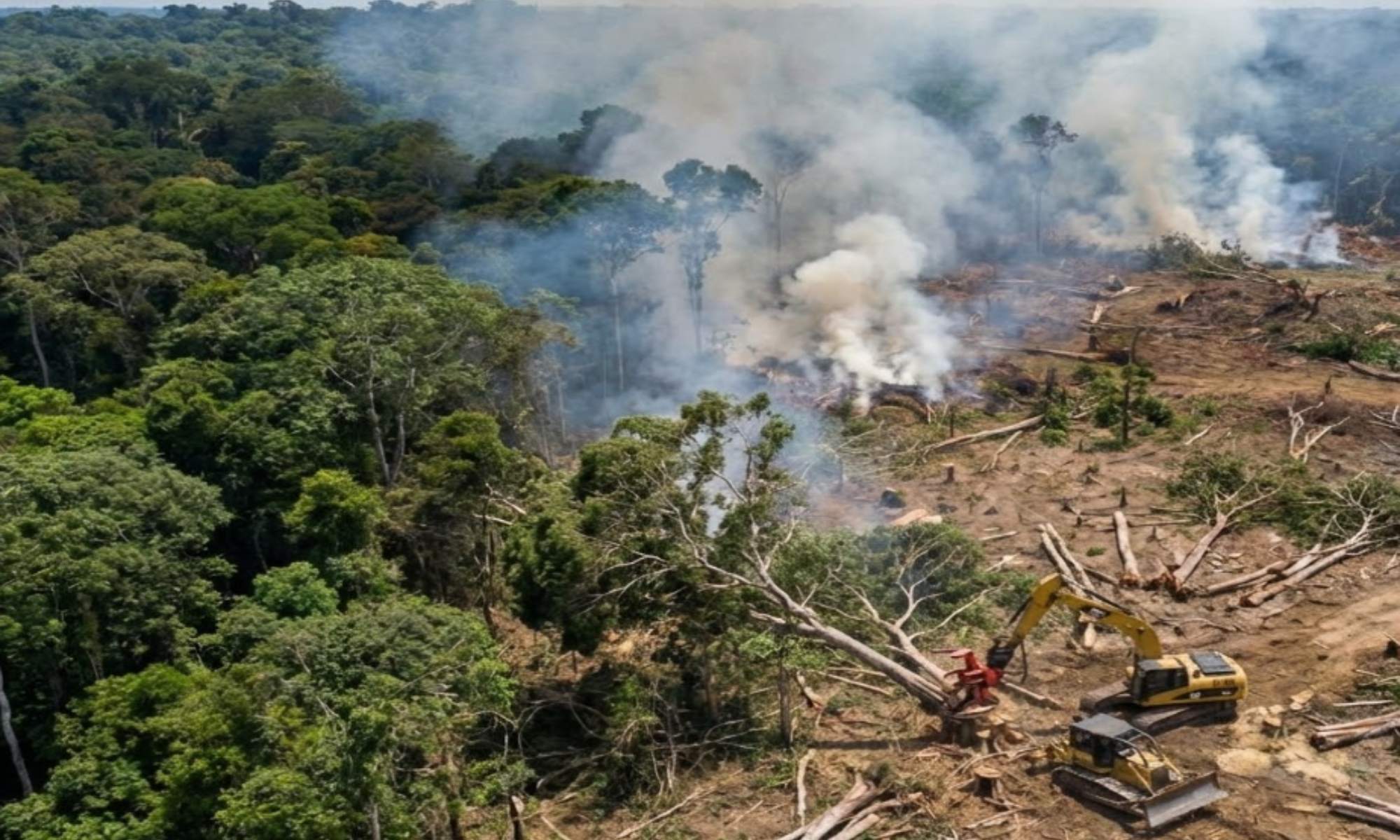
Conventional farming
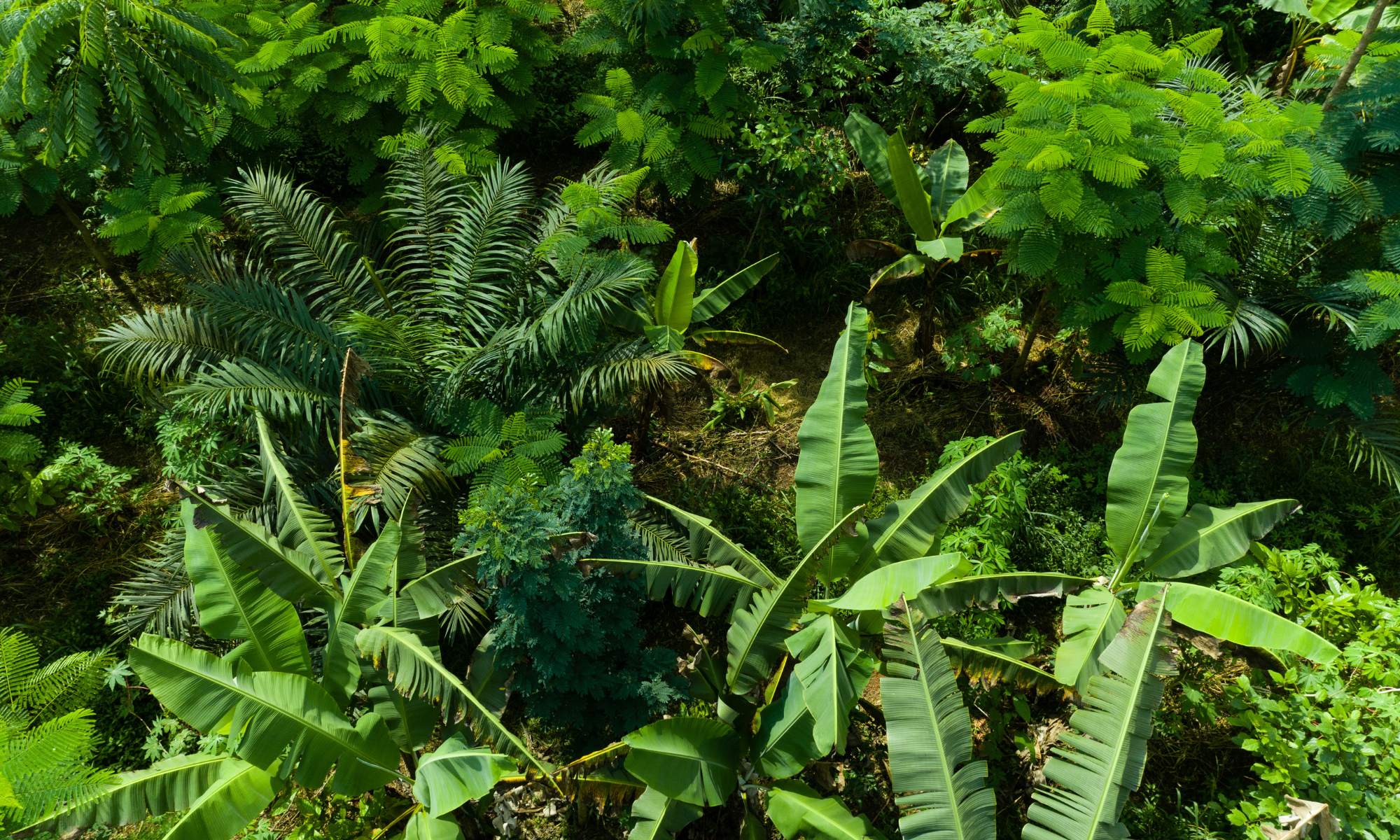
Dynamic Agroforestry
#roadtoclimatepositive
Our Path to Climate Positivity
With our Road to Climate Positive, we are pursuing a clear goal: climate-positive chocolate. This means producing chocolate in such a way that it sequesters more CO₂ in the long term than is emitted along its value chain. For us, climate positivity therefore doesn't just mean reducing emissions. It means rethinking chocolate as a whole system – from cocoa cultivation to packaging. This path is based on several levers that work together.
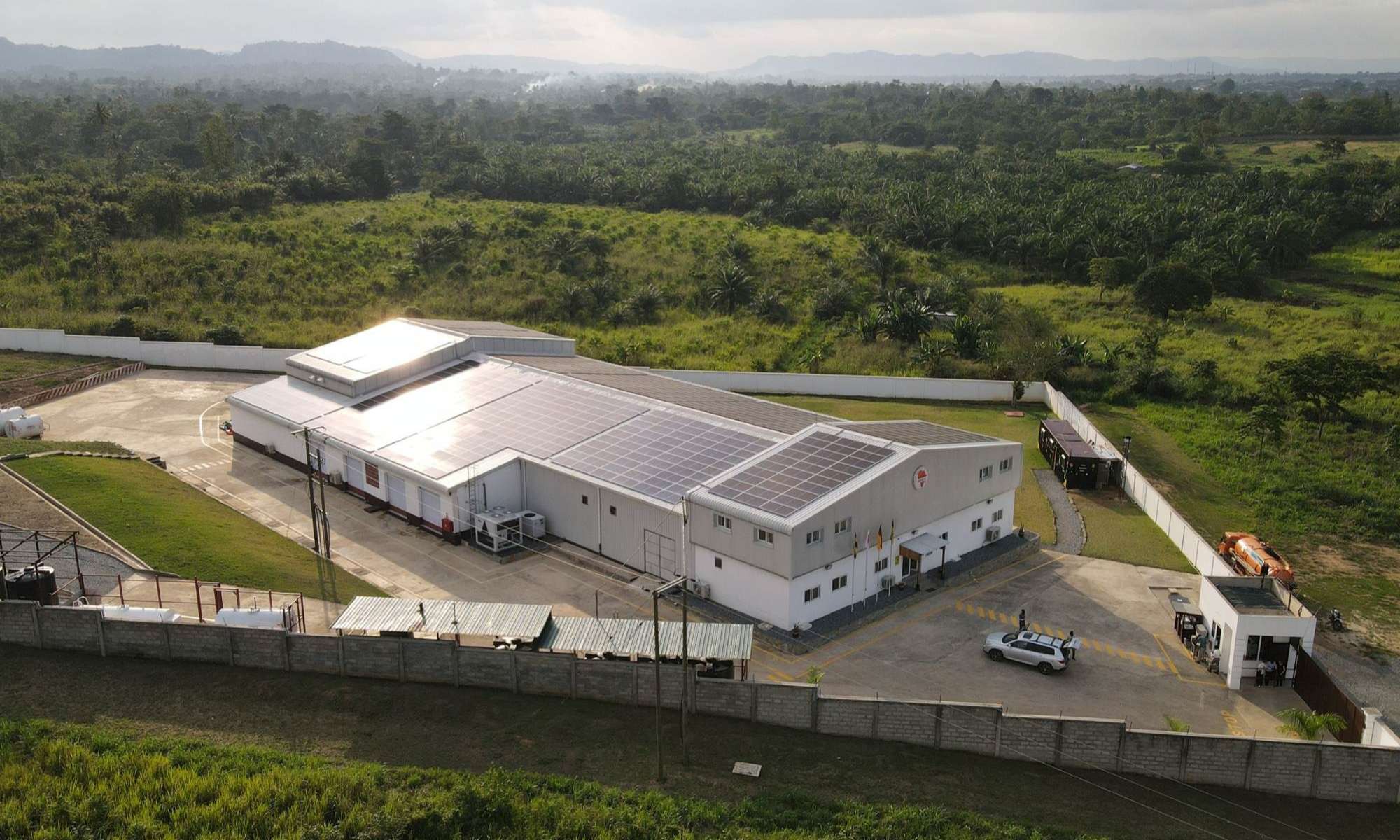
Solar-powered factory
A key lever is where our chocolate is produced: in Ghana. Our factory is powered by solar energy to meet the production's energy needs with the lowest possible emissions and reduce fossil energy sources. This way, we not only create more added value at the source, but also a production base that is better suited for the future.
Less fossil energy. More chocolate at the source.

Packaging that can circulate better
Packaging is also part of a product's carbon footprint. That's why we are working to use packaging solutions that are biodegradable, recyclable, or more resource-efficient than conventional alternatives. Our aspiration is not only to make chocolate better – but also the materials around it.
Less waste. More responsibility beyond the product itself.
Regenerative Agriculture
The greatest leverage lies where it all begins: on the farms. With Dynamic Agroforestry, we are relying on a cultivation system that strengthens trees, plant diversity, soil building, and natural cycles. In this way, cocoa cultivation can not only become more resilient in the long term, but also contribute to sequestering more CO₂ in the system – through trees, biomass, and healthier soils. For us, Dynamic Agroforestry is therefore a central building block on the path to climate positivity.
More diversity on the farm also means more potential for carbon sequestration.
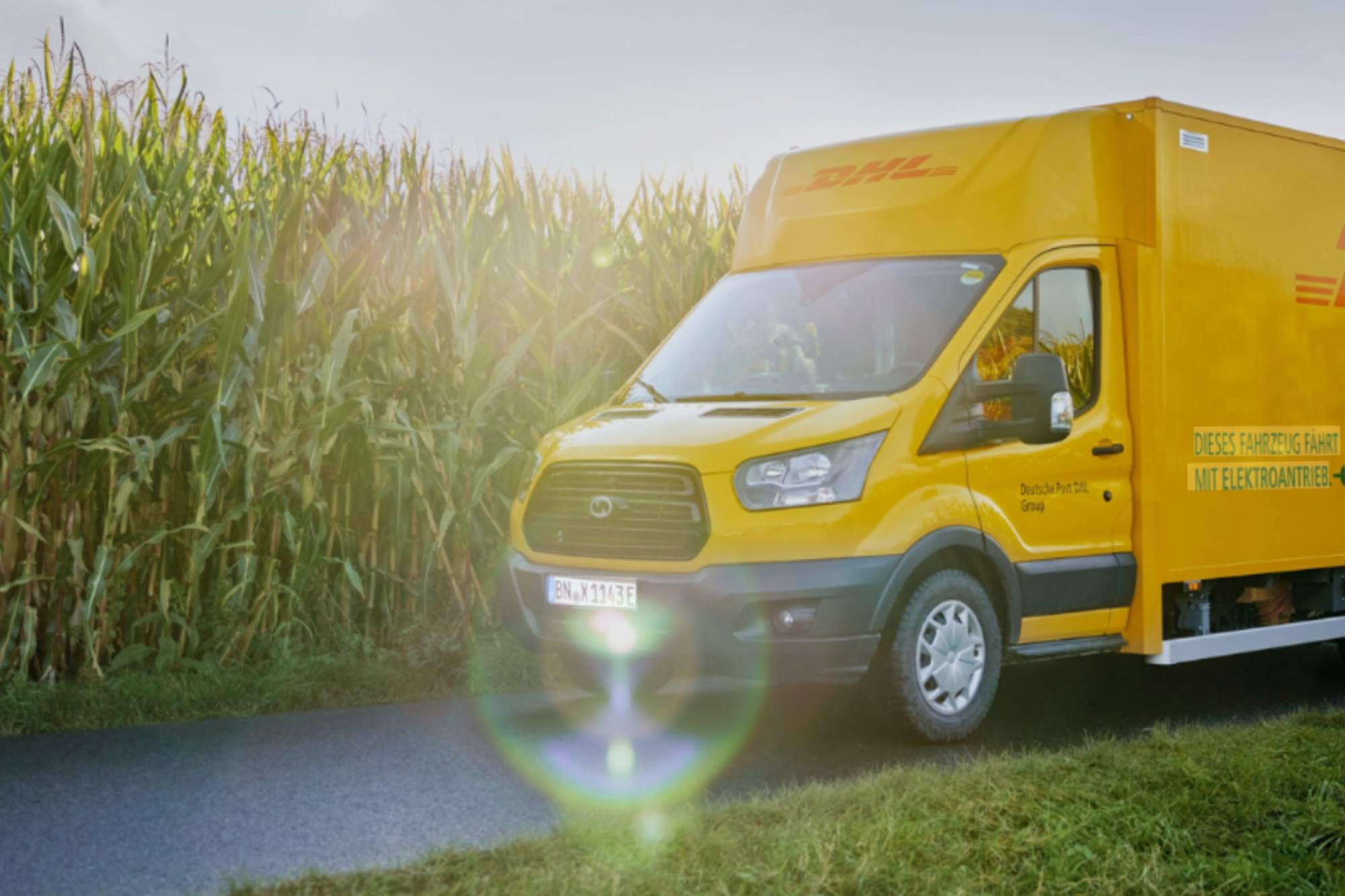
Climate-neutral shipping
The journey to the customer also counts. That's why we use shipping solutions that compensate for or reduce the resulting emissions, so that the last part of the supply chain is also more responsibly managed. Because climate impact doesn't end at the factory door.
Logistics must also be part of the solution.
Want to learn more?
Learn more about our impact

Foreword Hendrik On March 22, 2016, our first Kickstarter campaign went live. At the time, "Made in Africa" chocolate was a crazy idea to many. Almost a month later, exactly 10 years ago today, f...

Episode 11: From Computers to Chocolate – Richard's Journey
Foreword by Hendrik If it had been up to me, Richard probably would never have become part of fairafric . And that's something I would deeply regret today. In 2020, I asked Akua, a Ghanaian...

Excellent: Our 42% Fleur de Sel & Caramel is "Best Vegan Chocolate 2026"
Our fairafric 42% Fleur de Sel & Caramel was awarded best vegan chocolate at the PETA Award 2026. Discover the vegan M!lK Collection now.