


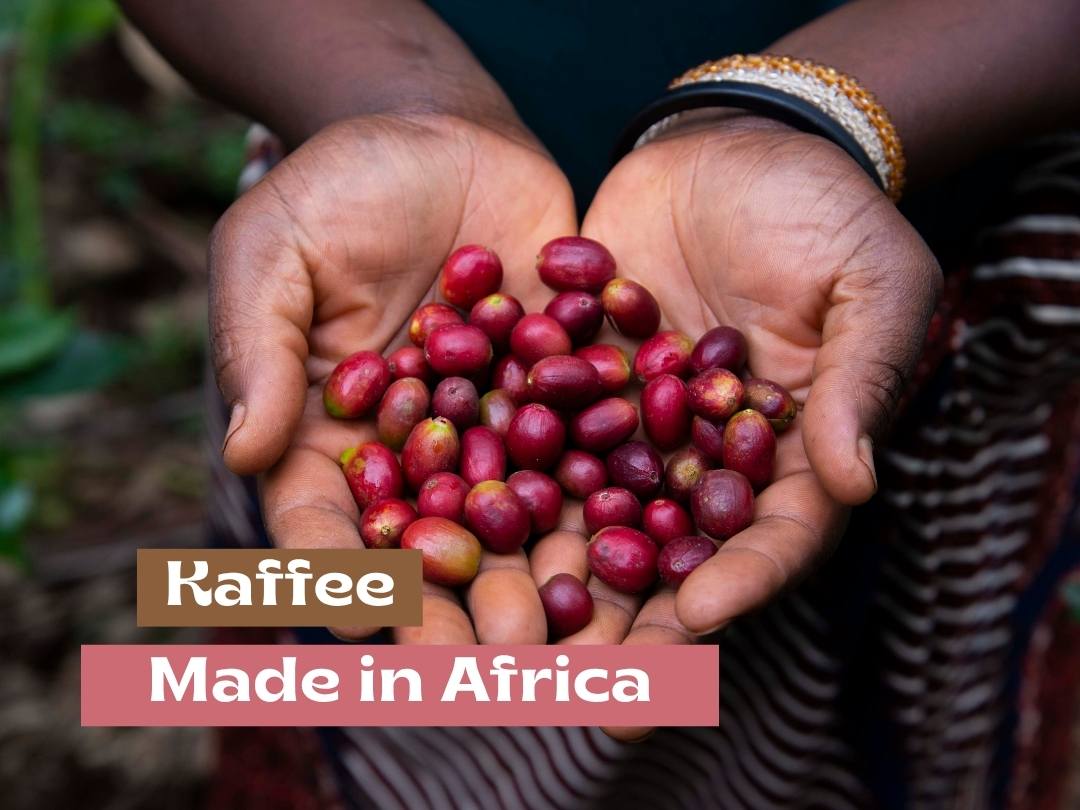
Coffee is one of the most popular beverages in the world – and at the same time one of the most unfairly traded. While we in Europe pay for cappuccinos, espressos, or flat whites, most of the value creation does not stay with the people who grow the beans. Over ten million small-scale farmers produce coffee – yet a very small portion of the economic profits reaches them.
Africa, the birthplace of coffee, is particularly affected by this. Although some of the world's best beans grow in Ethiopia, Rwanda, or Uganda, they are almost exclusively exported as green coffee. Further processing – roasting, packaging, quality control, and branding – happens where most of the profits are generated: in Europe or the USA.
Global Coffee Figures
In 2024, global coffee production was approximately 10.5 million tons.
Broken down by continent, production looks like this:
-
South America dominates the market – Brazil alone accounts for around 38% of world production.
-
Africa is the second-largest coffee-producing continent with about 18–20%, led by countries like Ethiopia, Uganda, Côte d’Ivoire, and Tanzania.
-
Asia follows with about 17%, with Vietnam as the most important producer.
Despite these strong contributions, most African coffee-producing countries remain in raw material status: the coffee is exported before it is roasted or packaged. This is precisely where the greatest value is generated – and this value does not stay in the country of origin.
Coffee Consumption in Germany
For years, Germany has been one of the largest coffee markets in the world – both in terms of imports and consumption. Coffee here is not just a luxury item, but a genuine daily ritual.
Coffee is even more popular than mineral water, both in quantity and frequency of consumption.
In Germany, an average of about 163 liters of coffee per person per year is consumed. This corresponds to around 5.4 kg of coffee per capita per year (cf. cbi 2025)
These figures show: Germany is not only a large coffee market, but a crucial lever for change. If more fairly produced and locally processed coffee is purchased here, it can have direct effects on income, jobs, and value creation in African countries of origin.
Every decision made in the supermarket or online shop thus helps to determine which system we support – one that cheaply exports raw materials, or one that promotes local value creation and builds a future.
What makes conventional coffee trade problematic
1. Green coffee instead of value creation
In the classic model, green beans are exported. Roasting, packaging, branding – and thus most of the economic added value – happens in developed countries. Little is left for the producers.
The brands we present bring precisely this added value back.
2. Extreme price fluctuations
World market prices for coffee are heavily influenced by weather, crop failures, and speculation. Example: In 2024, coffee export prices rose by about 38.8% compared to the previous year – particularly due to climatic failures in important growing regions.
In a fairer model, producers receive more stable prices and greater control over their marketing.
3. Little self-determination for producers
In many supply chains, farmers have little influence on how their beans are processed or sold. Decisions about quality, price, or further processing are often made by third parties abroad.
The brands we are presenting today change that: Here, the producers have a voice. They take responsibility. They actively shape the process.
1. Angelique’s Finest – Coffee from Women's Hands

Angelique’s Finest is a revolutionary concept from Rwanda and Uganda. The brand is 100% owned by women farmers – a model that goes far beyond classic fair trade approaches. Currently, over 2,300 women are part of the initiative. They decide on cultivation, processing, pricing, and design.

Per kilogram of coffee, the women earn about four euros more than in conventional trade – almost twice as much as usual. With the income, they build kindergartens, plant trees, buy animals, and invest in their communities. The impact is profound: income increases, self-determination grows, and new perspectives emerge.
In terms of taste, Angelique’s Finest impresses with a very balanced espresso, strong roasted notes, and a pleasant sweetness. The aromas range from dark chocolate to caramel and sweet orange.

💜 Our Favorite: Fair Chain Espresso Blend 💜
Flavor notes: Dark roasted, inspired by classic Italian roasts, with intense roasted notes, fine sweetness, and aromas of chocolate, caramel, and sweet orange.
👉 Click here for the Fair Chain Espresso Blend.
2. nuruCoffee – Specialty Coffee with Real Women's Empowerment

nuruCoffee is a social business from Berlin, founded by sisters Sara and Sali Nuru. Their approach: no donation logic, but economic self-determination. They source 100% organic-certified specialty coffee directly from cooperatives in Ethiopia – fair, transparent, and closely connected with the farmers.

At least one euro per kilogram sold goes to projects of the association nuruWomen e.V., which empowers women in Ethiopia. The programs promote financial literacy, entrepreneurship, and the development of their own income sources.
In terms of taste, nuruCoffee offers fine, clear, and floral profiles – typical of Ethiopian highland coffee. The coffees are aromatic, high-quality, and outstandingly balanced.

🤎 Our Favorite: Addis Delight 🤎
Flavor notes: Clear, creamy, and balanced with no noticeable acidity. Dark chocolate, fine toffee, pralines, and an elegant marzipan note.
👉 Click here for the Addis Delight.
3. Solino Coffee – 100% Value Creation in Ethiopia

Solino goes one step further: the entire production takes place in Ethiopia. The coffee is not only grown there but also roasted, ground, and packaged. This creates skilled jobs, keeps value creation in the country, and builds long-term expertise.

The beans come from Ethiopian highland regions and are slowly refined in a drum roaster, which optimally allows their complex flavor profiles to develop. The result is aromatic coffees with fruity and chocolatey notes that delight both coffee professionals and newcomers.

🖤 Our Favorite: Solino Crema Selection 🖤
Flavor notes: A fruity-spicy blend of Crema and Yirgacheffe. The Limited Edition features a label by Ethiopian artist Seifu Abebe.
👉 Click here for the Crema Selection.
Why these brands are important
Companies like Angelique’s Finest, nuruCoffee, and Solino prove that coffee trading can function more fairly – and that quality and social impact are not mutually exclusive but mutually reinforcing. They strengthen local economies, create jobs, promote self-determination, and bring value creation back to the country of origin.
We believe good coffee is more than just taste. It is a tool for change.
These brands show how much potential is in every cup – for the people who grow it and for us who enjoy it.


Leave a comment
This site is protected by hCaptcha and the hCaptcha Privacy Policy and Terms of Service apply.