
The Bitter Truth About Chocolate – and Why fairafric Stands Alone
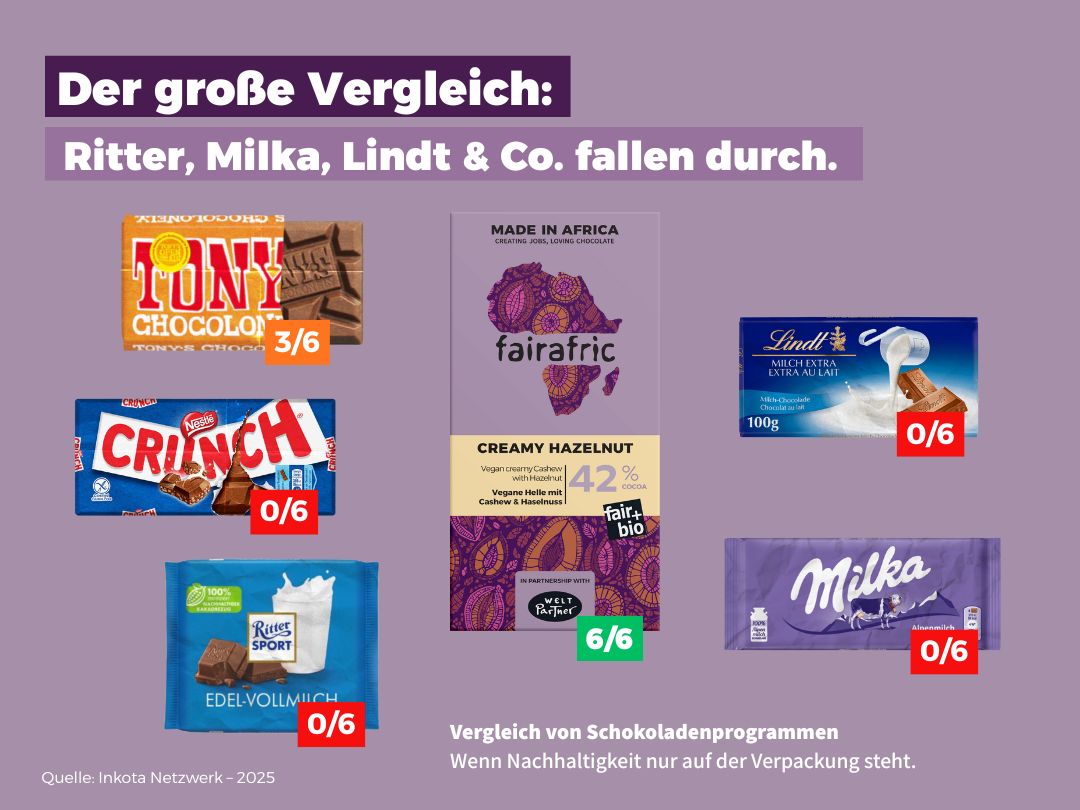
When it comes to fairness in the chocolate industry, there is often a large discrepancy between (marketing) promises and reality. This is now confirmed by the latest study from the Inkota Network (2025), which compared various chocolate programs and sustainability certifications – with results that may surprise many.
The Study: A Reality Check for the Chocolate Industry
The Inkota Network, a renowned development policy organization, investigated how credible the sustainability promises of major chocolate companies truly are. Six key criteria were evaluated:
-
Minimum Price
-
Living Incomes
-
Fair Milk Prices
-
Avoidance of Dangerous Pesticides
-
Co-determination of Cocoa Cooperatives
-
Production in the Country of Origin
The result is sobering, but there are also bright spots: most brands that position themselves as sustainable fail in most of these categories. Ritter, Milka, Lindt & Sprüngli, and Nestlé failed in all areas. Even Tony’s Chocolonely, which positions itself with the promise "100% slave free," passed only three of six criteria.
There is a positive highlight: GEPA, the Fair Trade pioneer, fulfills five out of six categories – only the production in the country of origin still takes place in Europe.
This shows that consistent fairness is possible if there is a genuine will for it.
Also, Naturland scores respectably with four out of six criteria. However, production in the country of origin and living wage prices are missing – a crucial point, as the latter, in particular, forms the core of true fairness. Without them, fairness remains a claim that is not fully realized in practice.
fairafric: The only brand that passes all criteria
According to the Inkota analysis, only one brand met all requirements: fairafric.
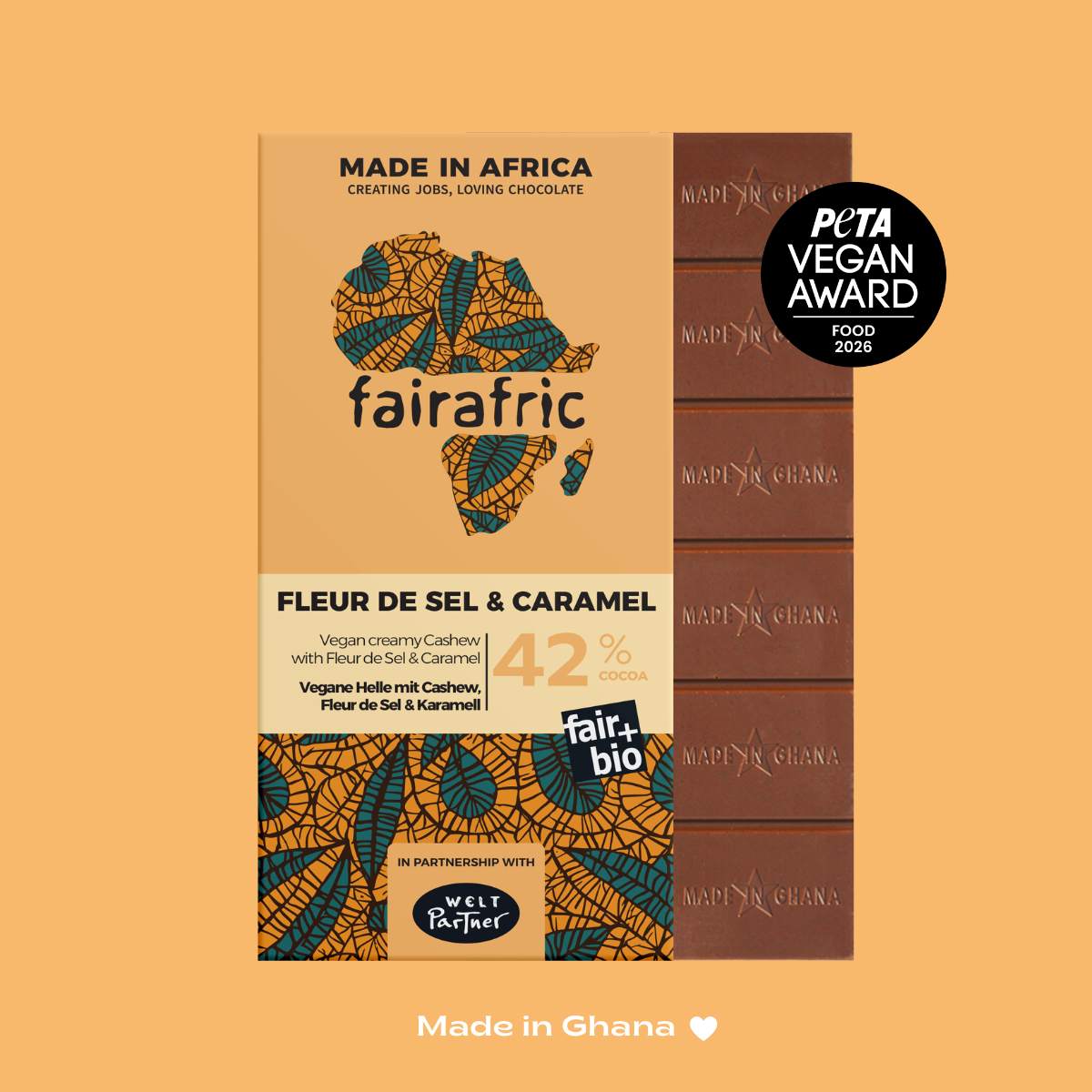
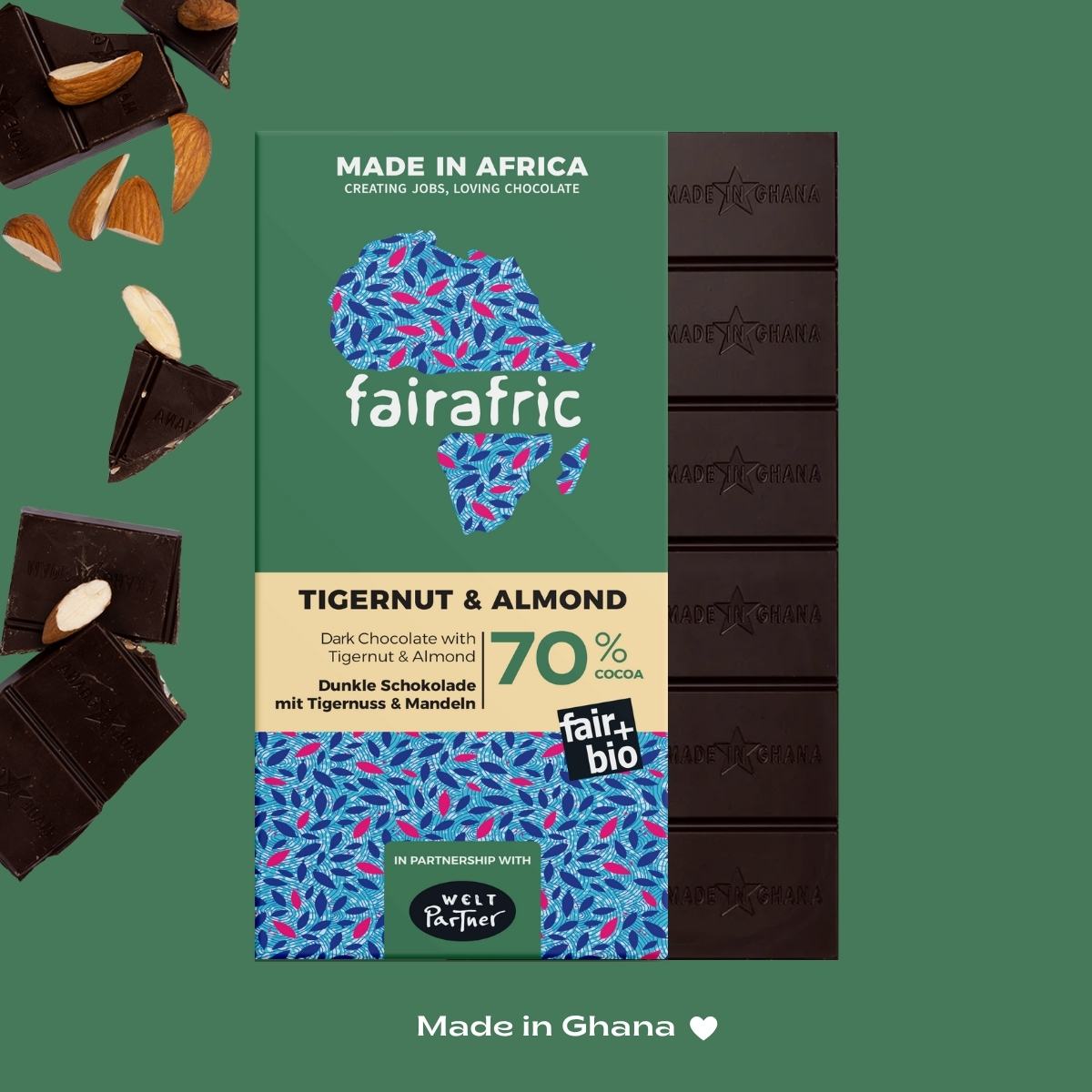
A company that produces chocolate where the cocoa grows – in Ghana.
fairafric's model shows that fair chocolate is not only possible but can be scalable and economically successful.
"We wanted to prove that value creation at the source works – and that fairness can be more than just a label."
– Hendrik Reimers, CEO & Founder of fairafric AG
fairafric works with a holistic approach:
🌍 Production in the country of origin – completely solar-powered
💰 Highest cocoa premiums in West Africa
👩🏾🎓 Training of local chocolatiers at the Amanase Chocolate School
🚫 No plastic in packaging
🌱 Dynamic agroforestry for climate-positive supply chains
The result: fair incomes, local value creation, and a completely new perspective on the global chocolate industry.

Source: Inkota Network 2025
🧠 Why fairness needs more than labels
Many companies rely on certificates or labels to communicate sustainability. But the study shows: fairness cannot be outsourced.
Real change happens where structures are changed – not just logos on packaging.
"If almost everyone fails – shouldn't we rethink what 'fair' truly means?"
– Jonas Schaller, CFO of fairafric
With fairafric, we prove that this is possible.
By keeping the entire value creation – from cocoa to the finished bar – in Ghana, genuine participation is created. Not just for individual farmers, but for entire communities.
The future of chocolate is made in Africa
While many big brands are still talking about fair conditions, chocolate history is already being written in Suhum, Ghana.
Every fairafric bar creates jobs, training, and opportunities – directly in the country of origin.
And best of all: the taste is just as convincing as the concept.
Handmade. High-quality. Fair.
Conclusion: When words become actions
The Inkota study is more than a industry comparison – it is a wake-up call.
For consumers who want to know what "fair" truly means.
And for companies that want to show that a fair value chain is possible.
fairafric is the proof:
Fairness doesn't start with the label, but with the origin.
Further Reading
-
Link to the Inkota study: https://www.inkota.de/themen/kakao-schokolade/faire-schokolade
-
fairafric Chocolate School: https://amanase.com/pages/about-us
-
Our new chocolate: https://fairafric.com/collections/tafelschokolade/products/42-coconut-pineapple-vegane-helle-mit-cashew

Leave a comment
This site is protected by hCaptcha and the hCaptcha Privacy Policy and Terms of Service apply.